
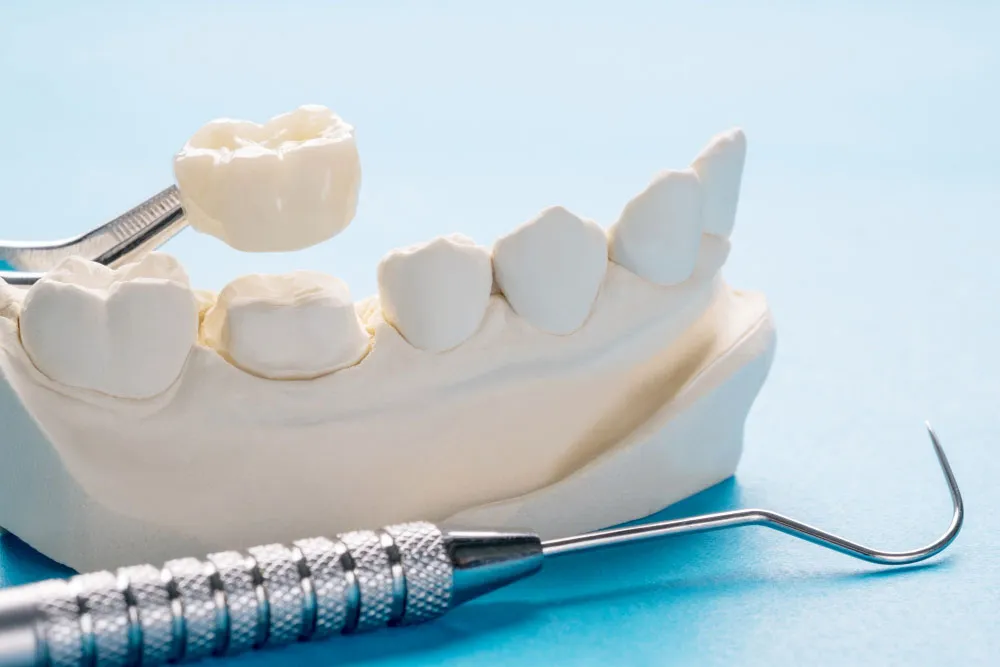
About Tooth Crowns
A dental crown is a custom-made “cap” that covers and protects a damaged or weakened tooth, restoring its shape, strength, and appearance. Crowns are commonly recommended after a large filling, a cracked tooth, significant wear, or root canal treatment, when the remaining tooth structure is not strong enough on its own.
Crowns protect heavily restored teeth and prevent further fracturing; crown fully covers part of the natural tooth lying above the gum line. There are many different materials, porcelain, metal like gold, metal alloy or a combination of these.
A crown may be necessary:
- A tooth has had root canal therapy
- Tooth consisting of more than half filling material
- A fractured tooth
- Cosmetic reason, tooth that appeared ugly due to wear or discoloration etc.
Crown installation required 2 visits, and a laboratory technician is involved in the process. These are all custom-made restoration to protect/restore your nature teeth. Our dentists only use the high quality material to give you the best result as possible.
Frequently Asked Questions
How do I know if I need a dental crown?
You may need a crown if a tooth is cracked, heavily filled, weakened after root canal treatment, severely worn down, or too damaged for a simple filling. A crown covers the tooth like a protective “cap” to restore strength, shape, and function.
Does getting a crown hurt?
Most patients find the procedure very manageable. We use local anaesthetic to numb the area, so you should not feel pain during treatment. Afterward, mild sensitivity or gum soreness can happen for a few days and is usually controlled with standard pain relief.
How long do dental crowns last?
With good oral hygiene and regular check-ups, crowns commonly last 10–15 years or longer. Lifespan depends on factors like biting forces (grinding/clenching), diet, oral hygiene, and the condition of the underlying tooth.
What types of crowns are available, and which one is best?
Common options include porcelain/ceramic (very natural-looking), zirconia (strong and aesthetic), porcelain-fused-to-metal (PFM) (durable with a metal base), and gold/metal (very strong, often for back teeth). The best choice depends on tooth location, bite, aesthetics, and budget—your dentist will recommend the most suitable option.
How do I care for my crown?
Brush twice daily with fluoride toothpaste, floss carefully around the crown (especially at the gumline), and attend routine dental cleans. Avoid chewing very hard items (ice, hard candies) and consider a night guard if you grind your teeth to protect both the crown and natural teeth.
A cap crafted to protect, restore and perfect your tooth
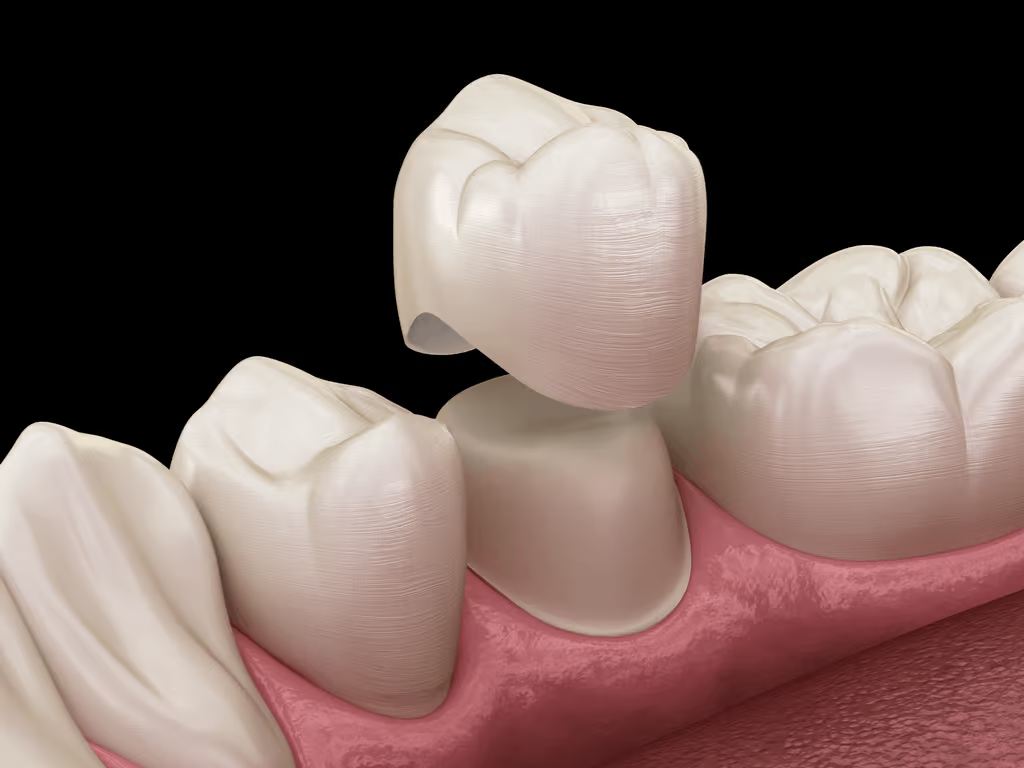
As the name suggests, a dental crown is a type of restoration that is placed over a damaged or severely weakened tooth like a cap to restore its shape, strength and function. Dental crowns distribute and disperse forces on the tooth much more evenly as opposed to a standard filling, preventing potential fractures or loss of tooth structure during daily function.
Tooth crowns can be made from a variety of different material choices depending on what works for the patient's needs. They are split into two main categories: metal and ceramic. Ceramics are tooth-coloured, with some special ceramics achieving life-like colours and translucencies making them indistinguishable from adjacent natural teeth.
Benefits of Dental Crowns
Crowns can help improve your ability to chew and speak.
We place a focus on designing crowns to help blend seamlessly with your surrounding teeth.
Made from high-quality materials, designed to provide strength and reliability. With proper care, crowns can be a long-lasting option.
Crowns help to shield and reinforce damaged teeth, aimed to minimise risk of further issues.
Get your crown in a single visit
Our Same-Day Dental Crown service uses in-practice CAD/CAM milling and digital scanning to design, fabricate and fit your permanent crown in one appointment — no temporaries, no waiting weeks between visits.

